Ear Piercing Bump: 5 Common Causes & What to Do
Discovering a bump on your ear piercing can be unsettling, especially if it feels itchy, tender, or swollen. The good news? An ear piercing bump doesn't always signal a serious infection.
These bumps frequently develop due to everyday irritation, an allergic reaction to jewelry metals like nickel, or the natural formation of scar tissue as your body heals.
Understanding what's causing your piercing bump usually comes down to observing its appearance and checking for other symptoms. In this guide, we explore five common reasons you might have an ear piercing bump, practical steps you can take for relief, and how to tell when you need a doctor's assessment.
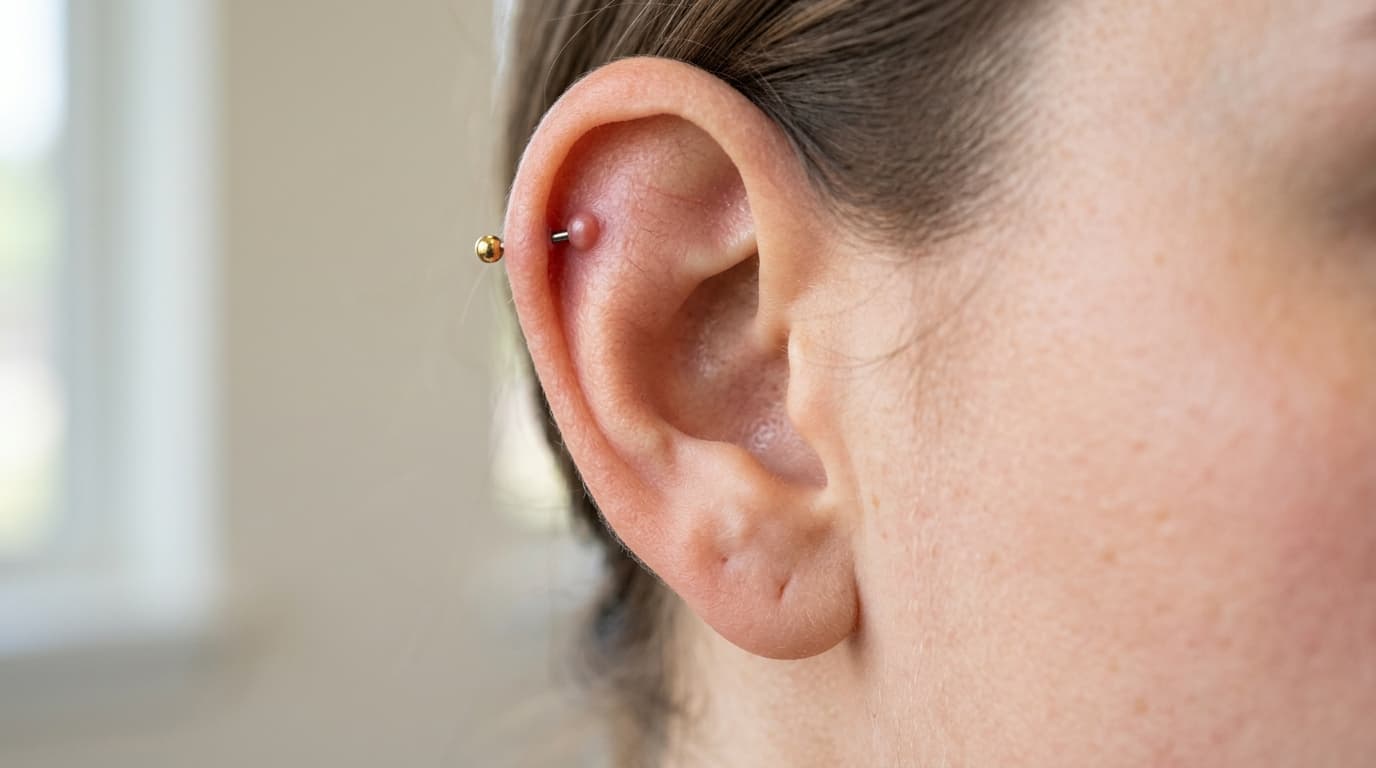
What Causes an Ear Piercing Bump?
An ear piercing bump can form for several distinct reasons, ranging from minor friction to changes in the healing tissue itself. Evaluating symptoms like itchiness, pain, local swelling, redness, and any unusual discharge can offer clues about the underlying cause.
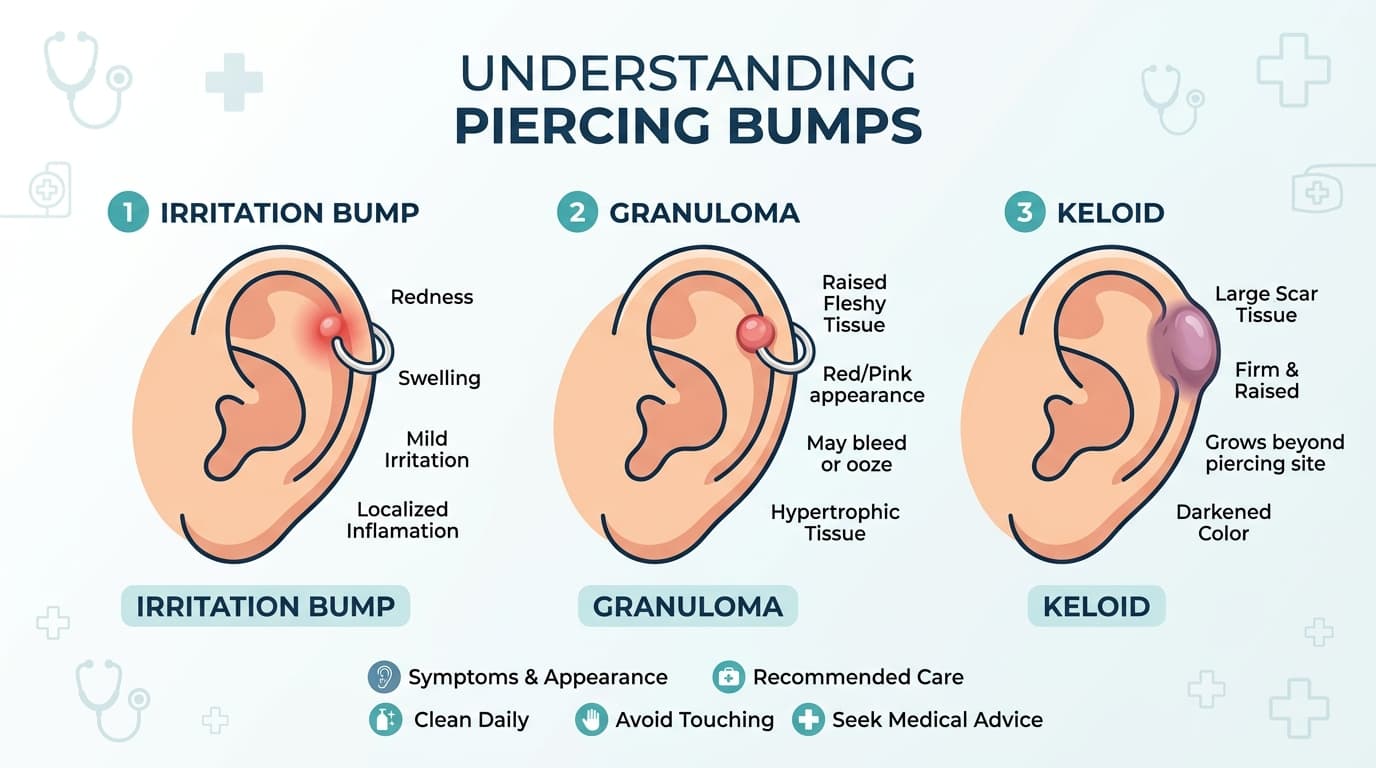
1. Irritation or inflammation
A new or healing ear piercing can easily become inflamed when exposed to repeated friction. Simple actions like touching or twisting the jewelry, sleeping on that side of your head, or snagging the piercing on clothing can aggravate the sensitive tissue.
An irritation bump is typically small, tender, and accompanied by mild redness. If the physical friction continues, the bump will take longer to resolve.
What to do: Minimize unnecessary contact. Clean the area gently and protect the piercing from physical pressure.
2. Allergic reaction to jewelry
Sometimes, an itchy ear piercing bump develops because your skin is reacting to the metal. Nickel is a notoriously common trigger for contact dermatitis, often causing persistent itching, localized redness, and swelling around the piercing site.
An allergic reaction typically presents with intense itching and a rash, rather than symptoms of worsening pain or pus.
What to do: Switch to hypoallergenic jewelry (like surgical steel or titanium) if you suspect a metal allergy. Avoid scratching the area. If symptoms persist, a doctor can help confirm if an allergy is responsible.
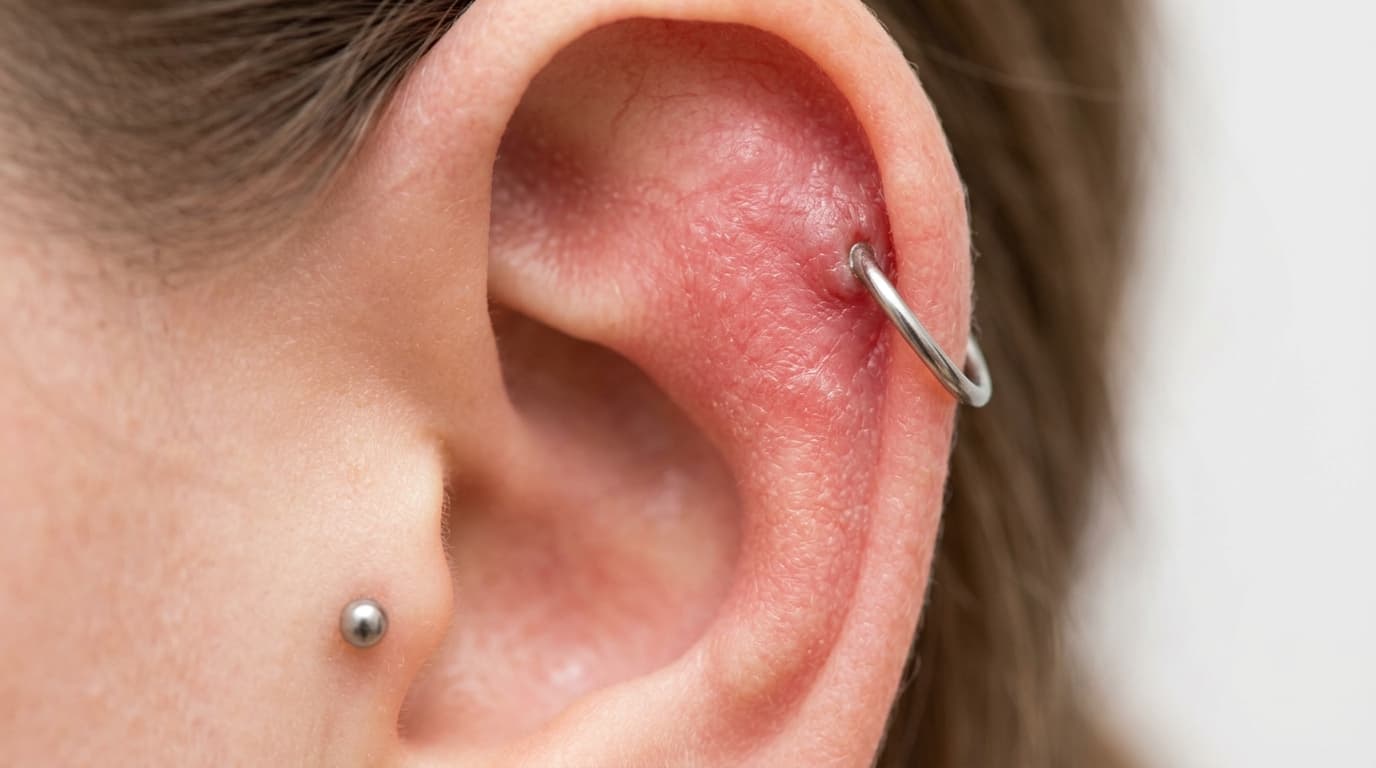
3. Granuloma
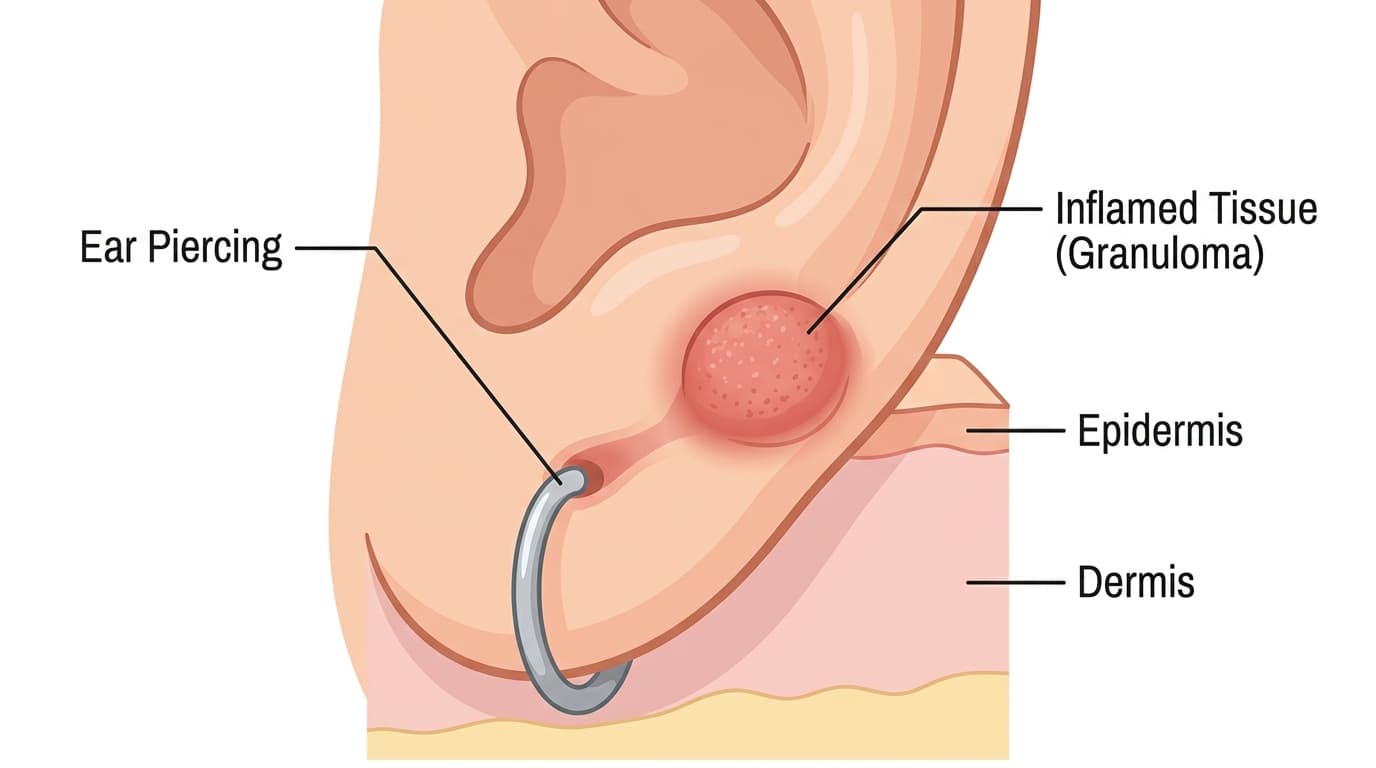
A granuloma is a small cluster of inflammatory cells that forms when your body reacts to a minor injury or a foreign object it perceives as irritating. Around a healing piercing, this can appear as a small, raised, raw-looking bump near the hole.
A granuloma is localized and might occasionally ooze clear fluid, but it isn't necessarily infected.
What to do: Avoid picking or squeezing the bump, which worsens inflammation. If the growth persists, grows, or bleeds easily, have a doctor assess it to rule out other skin conditions.
4. Keloid or hypertrophic scar
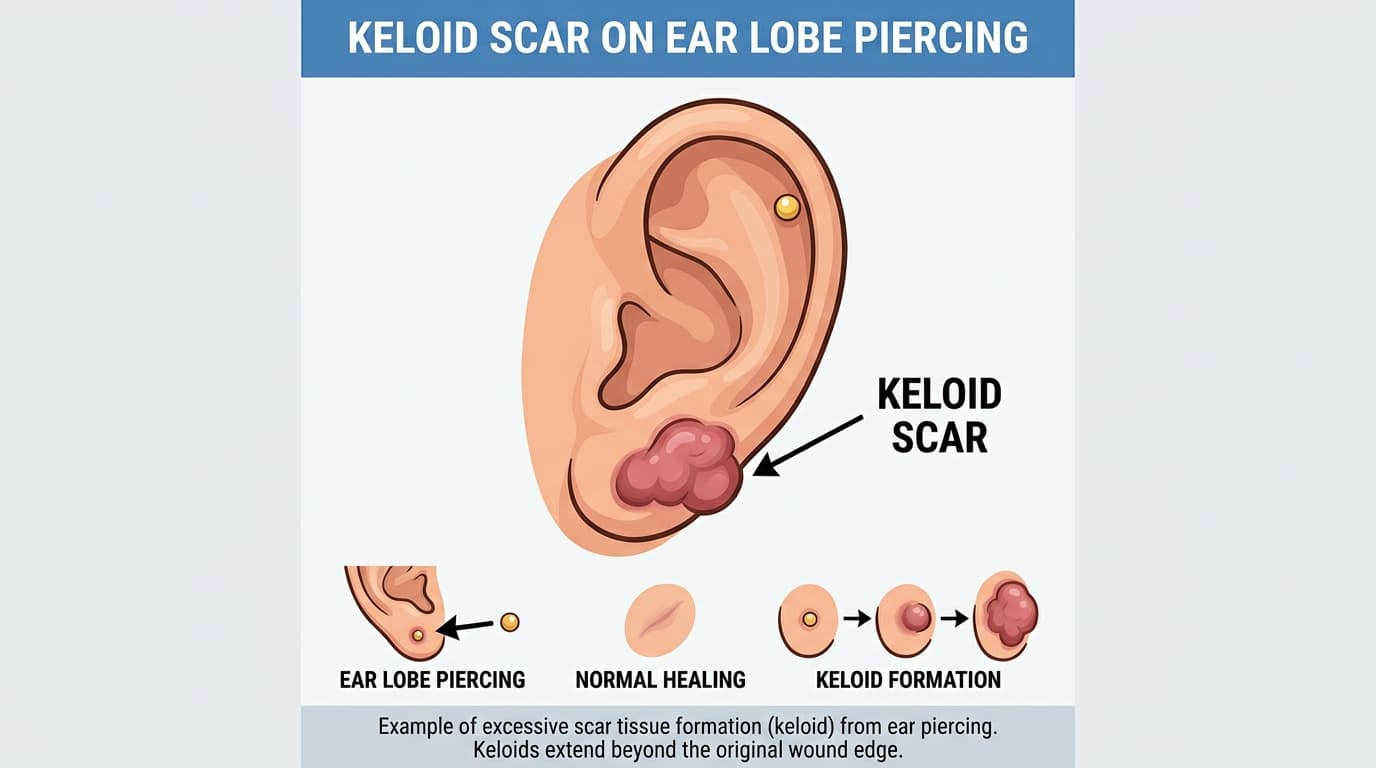
Keloids and hypertrophic scars are raised areas of firm tissue that develop when the body produces excess collagen during the healing process. A keloid can form as a firm, smooth growth around or directly adjacent to the piercing.
Unlike a temporary irritation bump, a keloid can continue expanding beyond the original wound and rarely resolves on its own. It may feel firm, itchy, or uncomfortable, but usually isn't acutely painful.
What to do: Never try to cut, pop, or forcefully remove a keloid yourself. A doctor or dermatologist can evaluate the scar tissue and recommend appropriate treatments, such as steroid injections or specialized silicone dressings.
5. Infection
An infected ear piercing bump occurs when bacteria enter the wound. Unlike minor irritation that gradually improves, an infection typically worsens over time.
Signs that point toward an infection include:
- Escalating pain or severe tenderness
- Warmth and expanding swelling around the earlobes or cartilage
- Significant, spreading redness
- Yellow, green, or foul-smelling pus
- Systemic symptoms like a fever or feeling generally unwell
What to do: Keep the area clean but avoid harsh antiseptics. If you suspect an infection—especially in an upper-ear cartilage piercing, which is prone to complications—seek medical evaluation promptly rather than attempting DIY treatments.
How to Tell if Your Ear Piercing Bump is Infected
Not every bump around an earring hole is infected. Many arise purely from mechanical irritation or mild allergic responses. However, differentiating between basic inflammation and an active infection is crucial for safe healing.
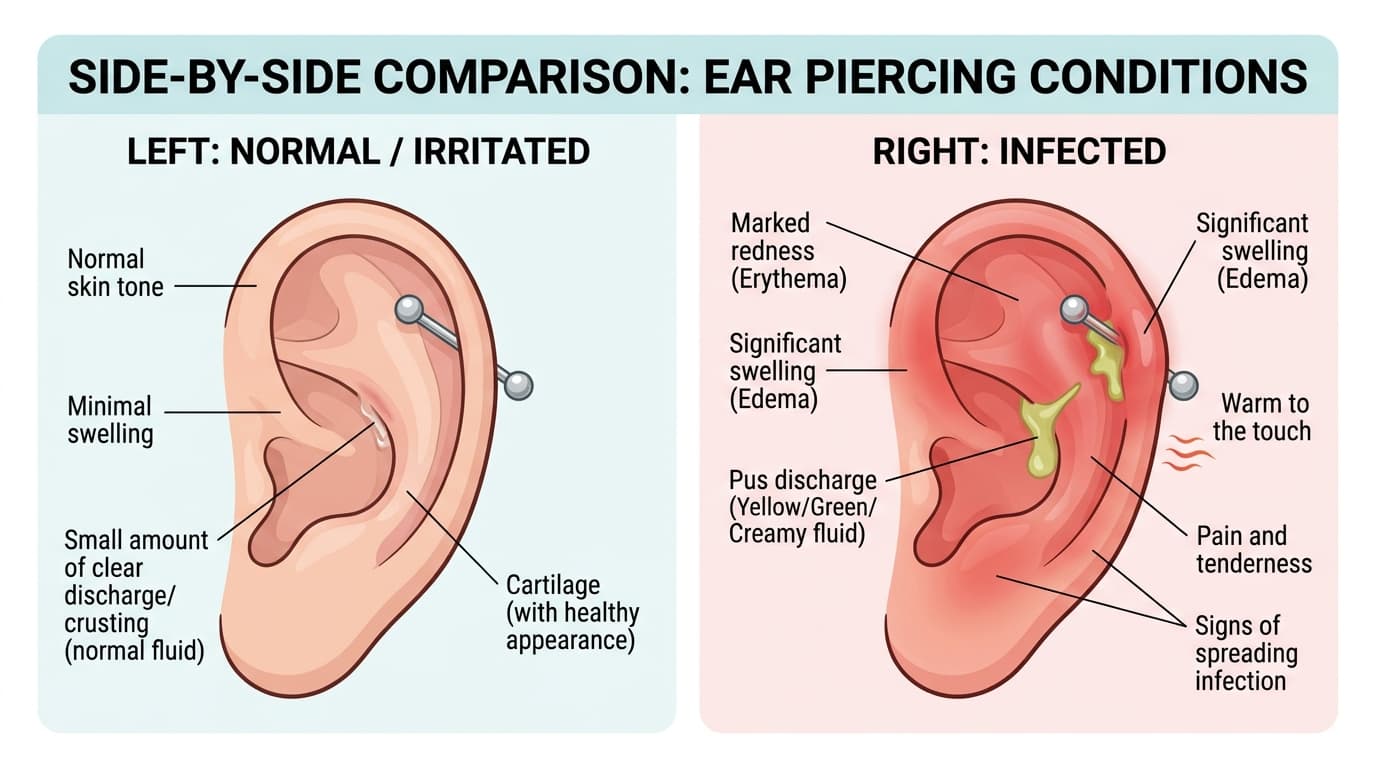
It's likely just irritation if you notice:
- Mild itching or localized tenderness
- A small, stable bump that isn't rapidly growing
- Redness or swelling that remains mild and doesn't spread
- Clear fluid, but no thick pus
It may be an infection if you experience:
- Worsening pain that throbs or disrupts sleep
- Skin that feels hot to the touch
- Redness spreading outward from the piercing site
- Yellow or green discharge
- Fever, chills, or swollen lymph nodes in your neck
If your symptoms are escalating, it's safest to consult a doctor. Infections in upper-ear cartilage require particularly urgent medical attention because cartilage has limited blood supply and is vulnerable to permanent damage.
How to Treat an Ear Piercing Bump at Home
Proper ear piercing bump treatment depends entirely on its cause. While infections or keloids require professional medical care, minor irritation can often be managed with simple adjustments.
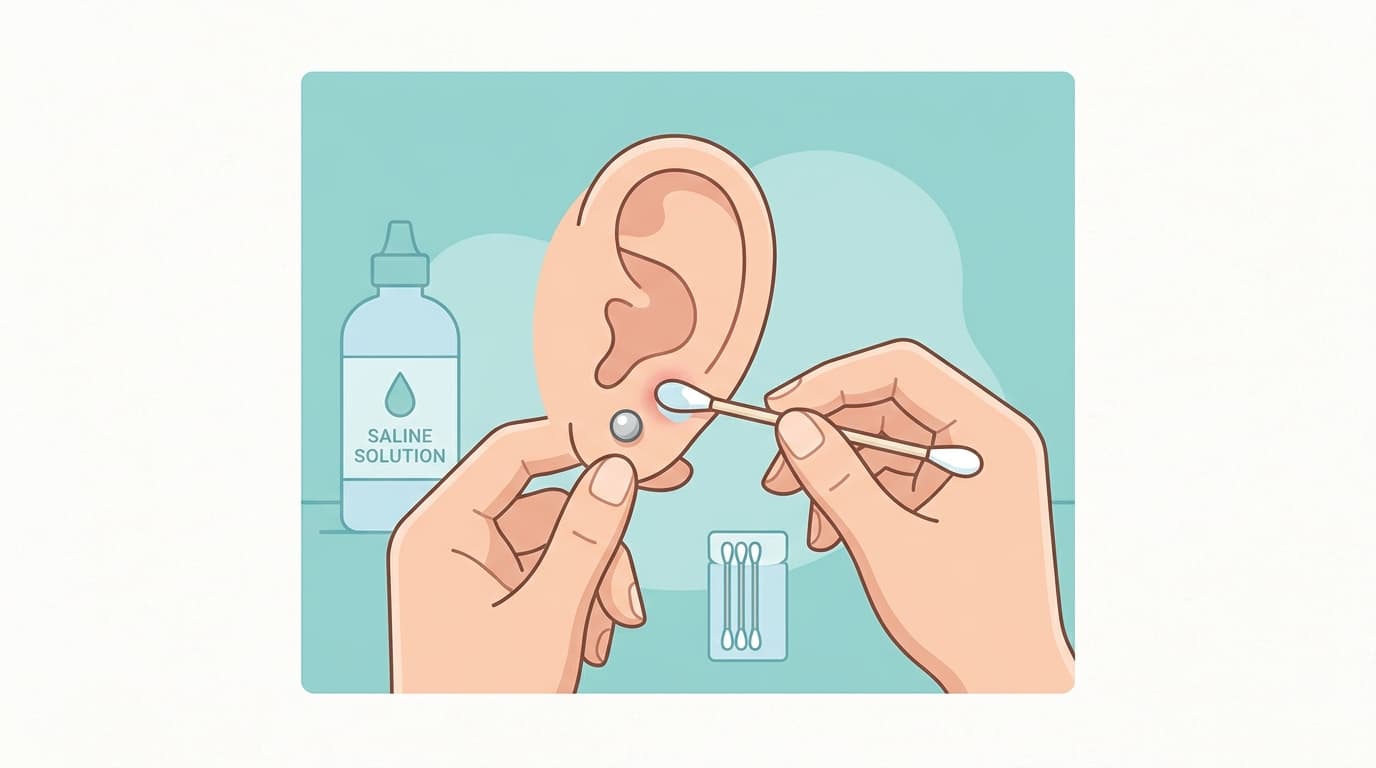
For a mild, non-infected bump:
- Prioritize gentle cleaning: Clean the area as directed by your piercer, usually with a sterile saline solution. Avoid harsh chemicals like rubbing alcohol or hydrogen peroxide, which dry out healing tissue.
- Hands off: Never squeeze, pop, or drain the bump. This damages the tissue and introduces bacteria, drastically increasing the risk of infection.
- Reduce friction: Avoid sleeping on the affected side and be careful when brushing hair or pulling shirts over your head.
- Evaluate your jewelry: If persistent itching or a rash is the main symptom, changing to a high-quality, nickel-free metal might resolve the issue.
If the bump is acutely painful, discharging pus, or failing to improve after a few days of careful hygiene, stop experimenting with home remedies and seek medical advice.
When to See a Doctor for an Ear Piercing Bump
While many minor piercing bumps resolve with patience and proper aftercare, some require professional medical assessment. You should connect with a doctor if:
- The bump is rapidly expanding, becoming severely painful, hot, or highly swollen
- You observe thick yellow or green pus
- Redness is streaking or spreading across your ear
- You develop a fever, chills, or nausea
- The bump keeps recurring despite good hygiene
- The piercing is located in the upper-ear cartilage (such as a helix or tragus piercing) and shows any sign of worsening pain or redness
A doctor can accurately evaluate the piercing, differentiate between a granuloma, keloid, allergy, or infection, and prescribe targeted treatments like topical or oral antibiotics if necessary.
Frequently Asked Questions
Not sure what's causing your ear piercing bump?
Connect with a doctor now to have your symptoms reviewed and get a clear plan for your recovery.
Get doctor review now
Describe your symptoms online and let a qualified doctor decide the appropriate next step.