Sore Throat
Most sore throats are caused by viruses and usually get better on their own within about a week. Rest, warm fluids and warm salt-water gargles can help relieve symptoms. See a doctor if your sore throat lasts more than a week, you have a high fever, or you have difficulty swallowing or breathing.
Start online doctor consultation
On this page
Emergency: When a sore throat needs urgent care
Most sore throats are not emergencies. However, get urgent medical help if you have:
- Trouble breathing, or a high-pitched sound when breathing in
- Drooling or being unable to swallow saliva
- Unable to open your mouth fully
- Severe pain on one side of the throat, especially with swelling
- Swelling of the neck or face
- Severe difficulty swallowing or rapidly worsening symptoms
Call 112 or go to the nearest emergency department. These symptoms can sometimes indicate a more serious throat or airway problem and should not be managed at home.
What is a sore throat?
A sore throat, medically known as pharyngitis, is an itchy, scratchy, painful or uncomfortable feeling at the back of your throat. It is very common and happens when the tissues lining the throat become irritated or inflamed. A sore throat can make it painful to swallow or talk. It is most commonly caused by a viral infection, but allergies, irritation, acid reflux and some bacterial infections can also cause it.
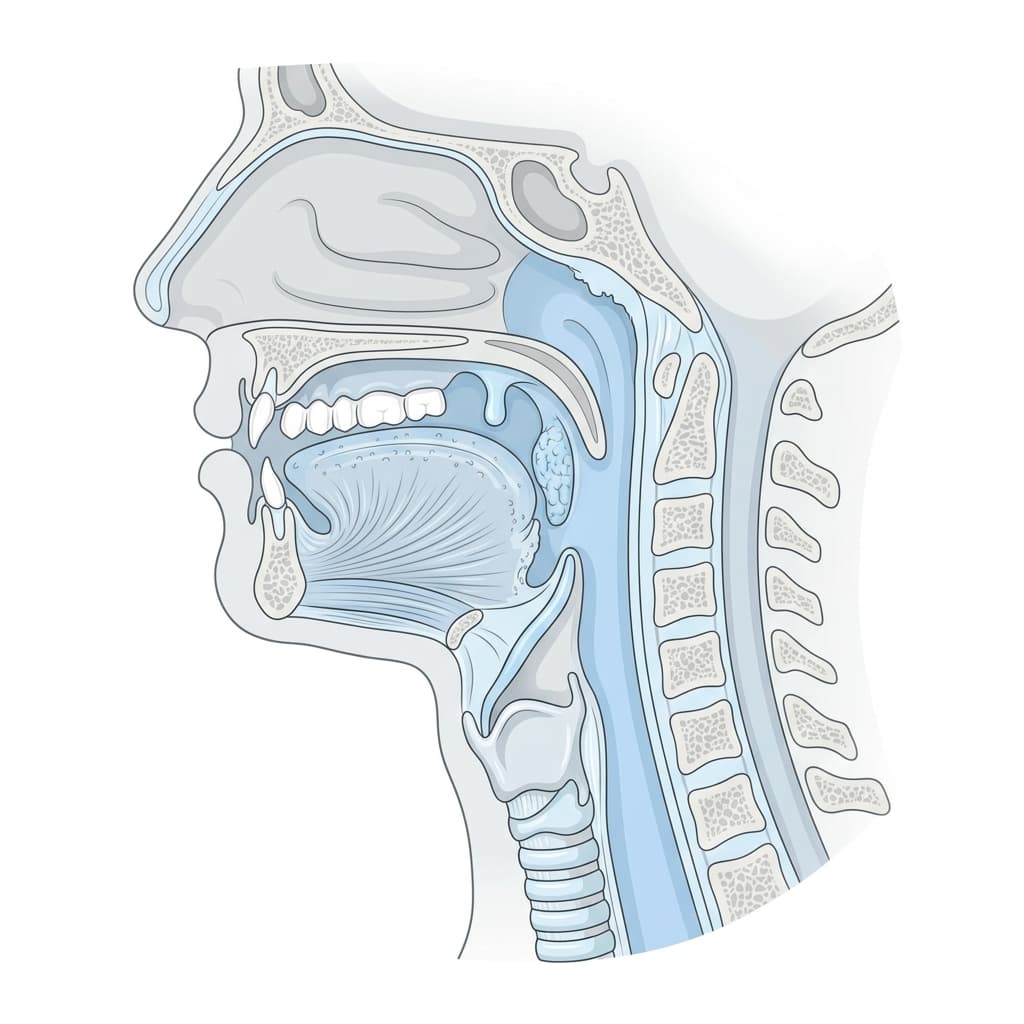
Symptoms
Main symptoms
Symptoms that often come with it
What causes a sore throat?
A sore throat can have several causes. Viral infections are the most common, but bacterial infections and non-infectious conditions can also irritate the throat.
Rarely, persistent throat symptoms can be related to other conditions, including growths in the throat or voice box. A sore throat that does not improve, keeps returning, or occurs with persistent hoarseness or a lump in the neck should be assessed by a doctor.
How long does a sore throat last?
Most viral sore throats improve by themselves and are usually better within about one week.
The exact duration depends on the cause. Bacterial infections, tonsillitis, reflux and other conditions may need different treatment.

Sore throat home remedies that help
Gargling with warm salt water can soothe an irritated throat and may reduce discomfort. Mix about ½ teaspoon of salt in one glass (around 240 ml) of warm water, gargle and spit it out. Do not swallow the salt water.
Warm water, soup or tea can keep you hydrated and soothe an irritated throat. Honey may also help soothe cough and throat irritation. Do not give honey to children under 1 year of age.
If talking makes your throat hurt, give your voice a break. Avoid shouting, prolonged talking and repeated throat-clearing while your throat is irritated.
Dry air can make a sore throat feel worse. A clean humidifier or cool-mist vaporizer can add moisture to the air and may make the throat feel more comfortable.
Throat lozenges or hard candies can temporarily soothe throat irritation. Do not give hard candies or lozenges to young children who may choke on them. Follow the age instructions on the product.
Traditional Indian options
These traditional remedies can be used for comfort when appropriate, but they should not replace medical assessment when symptoms are severe, persistent or worsening.
What not to do
Avoid these common mistakes when you have a sore throat:
- Don't start antibiotics on your own. Most sore throats are viral, and antibiotics do not treat viral infections.
- Don't smoke or stay around cigarette smoke. Smoke can further irritate your throat.
- Don't force yourself to eat very spicy foods if they increase the burning or pain.
- Don't force very cold foods or drinks if they make your symptoms worse.
- Don't ignore difficulty breathing or swallowing. These symptoms need urgent medical attention.
Which medicines are safe?
Medicines can help control pain and fever, but the right medicine depends on your age, health conditions, other medicines you take and the cause of the sore throat. Paracetamol can help reduce pain and fever — do not take more than the recommended amount, and check combination cold medicines so that you do not accidentally take paracetamol twice. Some lozenges and throat sprays can temporarily relieve throat pain. Since most sore throats are caused by viruses, taking antibiotics when they are not needed will not make you recover faster. If a doctor suspects or confirms a bacterial infection, antibiotics may be recommended. Talk to a doctor before taking medicines if you are pregnant, have liver or kidney disease, take regular medicines, or are giving medicine to a child.
When to see a doctor
Book a routine consultation if:
- Your sore throat lasts more than a week
- Your sore throats keep coming back
- You have a fever above 38.3°C (101°F)
- You notice white patches or pus on the tonsils
- You develop a rash
- You have ear pain
- You have a weakened immune system
- Your symptoms are getting worse instead of better
- You develop persistent hoarseness or a lump/swelling in the neck
Can a sore throat be assessed online?
Yes, some sore throats can be assessed online — but an online consultation cannot replace an in-person examination when red flags are present or a throat test is needed. During an online consultation, a doctor can ask about your symptoms, how long they have lasted, fever, swallowing difficulty, cough, recent exposures, medical history and other warning signs. If your symptoms suggest that you may need a physical examination, throat swab or urgent care, the doctor can guide you accordingly.
Prevention
You can reduce your risk of infections that cause sore throat by:
- Washing your hands regularly
- Avoiding close contact with people who are sick
- Avoiding sharing utensils, cups and bottles with someone who is ill
- Covering your mouth and nose when coughing or sneezing
- Avoiding smoking and secondhand smoke
- Staying hydrated
- Getting enough rest
A note from the doctor
“In my clinic, most sore throats I see are caused by viral infections and settle with rest, fluids and simple symptom relief. What worries me are symptoms such as difficulty breathing or swallowing, significant swelling, severe one-sided pain, or a sore throat that is not improving. Those symptoms deserve a proper medical assessment rather than self-treatment.”
Sore Throat FAQs
Is a sore throat always an infection?
Do I need antibiotics for a sore throat?
Can I have a sore throat without a fever?
Is a sore throat a sign of COVID?
Can I take a sore throat medicine while pregnant?
Why does my throat hurt more in the morning?
How can I soothe a sore throat at home?
When should I worry about a sore throat?
Get a doctor to review your sore throat
A registered doctor will ask about your symptoms, duration, fever, and warning signs — then advise you on whether home care is safe or you need further assessment.
Start online consultationMedical References
1. Ministry of Health & Family Welfare, Government of India — National Treatment Guidelines for Antimicrobial Use in Infectious Diseases. 2. Ministry of Health & Family Welfare — Standard Treatment Guidelines: Pharyngitis. 3. Centers for Disease Control and Prevention (CDC) — Sore Throat Basics, 2024. 4. CDC — About Strep Throat, 2026. 5. CDC — Testing for Strep Throat or Scarlet Fever, 2025. 6. World Health Organization (WHO) — Guideline on the management of sore throat/pharyngitis, 2025. 7. MedlinePlus — Pharyngitis: Sore Throat, reviewed 2025.